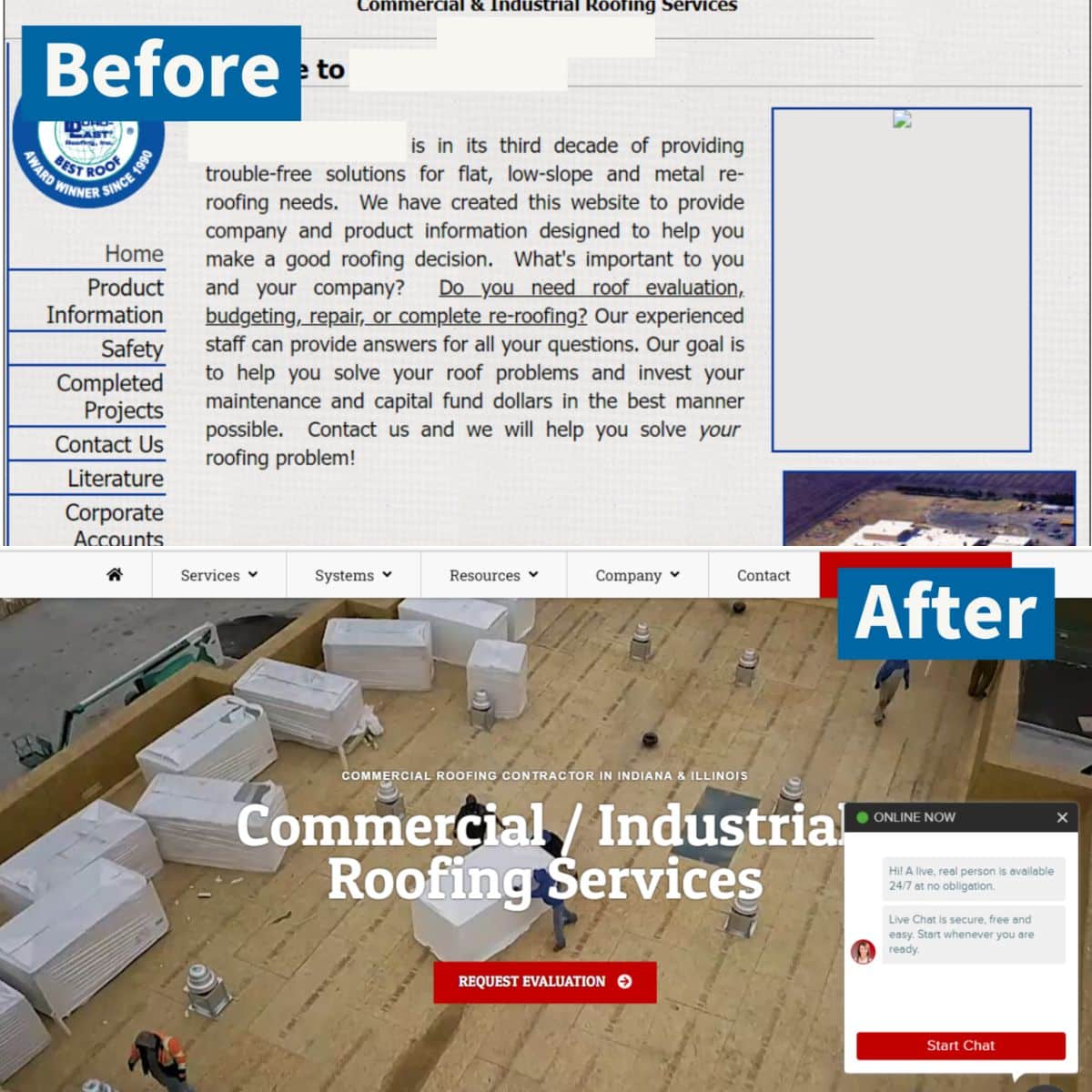
If you look at a website from 2000 and compare it to one from this year, the older one will look like it was designed by a 5-year-old by today’s standards.
Garish colors, excessive white space, and PowerPoint-like designs were the norm. Thankfully, few of these designs are still on the internet today.
Business owners clearly need to update these pages from time to time, but how often should a website be redesigned?
You obviously need a redesigned website if your site is 20 years old. But it is less obvious whether you need an update if you made your website in the last few years.
While there can be exceptions to the rule of thumb, you can use a few guidelines to determine when your site should be redesigned.
How Often Do You Need to Redesign Your Website?
It may be time to consider an update if it has been a while since you’ve redesigned your website.
As a general rule, you should redesign your site every two years.
This seems like a short time period, but it’s like eons in the tech world. Tech is constantly changing, so two years is an eternity.
Most likely, the things that attracted audiences three years ago are no longer cutting-edge today.
Reasons to Do a Website Redesign
Once you understand how often a website should be redesigned, the next step is convincing your company to spend money to redesign your website.
No matter what industry you work in, there are a few common reasons why you should update your site.
From avoiding plugin issues to changing your brand image, there are many ways a site update can benefit your business.
1. Websites Get Outdated
Back in 1965, an American engineer named Gordon Moore created Moore’s law. According to him, the number of components on an integrated circuit would double every year.
While Moore’s law might be finally coming to an end, the concept is true for many different tech fields.
In the tech industry, new technology, websites, apps, and software programs are constantly being improved upon. Websites are a great example of these updates in practice.
The popular designs from 5 or 10 years ago won’t cut it today.
For example, websites rarely included video content five years ago. They were more likely to have 3D fonts and less likely to have a responsive web design.
Additionally, many companies didn’t use HTTPS encryption to protect their sites.
2. Systems Change
Content management systems (CMS) also change over time. Today, WordPress is used for more than 41% of websites. Joomla and Shopify are the next two most common CMS programs.
While WordPress has consistently remained one of the most popular systems, the same isn’t true for Shopify.
Shopify wasn’t even created until 2006 and didn’t have any obvious market share until 2014. Back in 2010, WordPress, Joomla, and Drupal were the leading CMS choices.
If you want your site to work with popular plugins and apps, you need the right CMS.
While most business owners don’t want to get into the nitty-gritty of site operations, it’s important to take some time to understand your CMS as you redesign your website.
3. Add Functionality
New features are constantly being designed, and these features typically make your life easier.
Today, your site should have easy navigation, a mobile-friendly design, and social media integrations. Yoast, Google Analytics, and similar apps can make running your site easier.
As time goes on, you will need to redesign your website again and again. The internet isn’t static, so a fresh, professional site will always need new updates to look and function its best.
4. Broken Links & Software
Unfortunately, some top plugins aren’t updated consistently.
Sometimes, developers release a CMS plugin and never update it.
Over time, this can lead to security flaws and functionality issues unless you update your site to include a replacement plugin.
Additionally, you may have broken links or files and folders on your website that no longer work and will need redone or redirected.
5. Drive More Online Traffic
As time progresses, Google will continue to update its search engine algorithms. When this happens, you have to update your website if you want to stay at the top of the search engines.
Google and other search engines like to see regular updates, so you also need to revise your content regularly.
With a redesigned website, you can include new search engine optimization (SEO) factors, which can help bring in more traffic.
For instance, Google now prioritizes HTTPS designations, fast load times, user experiences, and closely-related content.
These weren’t such a big deal several years ago, so it is important to update your site regularly if you want to keep bringing in organic traffic.
6. Brand Changes
Your brand probably won’t stay the same forever. Over time, most brands undergo a gradual shift in messaging.
Because of this, you should remember to redesign your website frequently to reflect your shifting brand image.
Beyond simply redesigning your site to match your brand, you can also update your site for specific campaigns.
If you are launching a major product or working with a new spokesperson, you can always update your website to support your new promotion.
7. Keep It Fresh & Modern
People always gravitate toward the latest trends. If you haven’t redesigned your site in 10 years, your customers will notice it.
By updating your site, you can make your pages look fresh and appealing to current and prospective customers.
With a fresh and modern website created by a professional, your users will easily be able to navigate the site and find what they’re looking for.
A newly updated website also has a better chance at being found by search engines as the content will be more up to date and should be better quality.
8. Increase Conversion Rates

Having a website that is designed to be user-friendly and meets the needs of your customers can drastically increase conversion rates.
If you have an old website that doesn’t work well on mobile devices or has outdated content, it may be time to redesign it.
A redesign will give you a chance to update your site’s information with the latest marketing and technology trends.
You will also get a chance to freshen up your site design with updated graphics and features.
A recent study found that “high-quality websites” can lead to an increase in conversion rates after a website redesign.
The study also found that design has a substantial effect on how people perceive a website, and the more positive the perception, the more likely they are to convert.
As a result of this study, it is clear that an old and outdated looking website can end up hurting your conversion rates, and a redesign with better usability and user experience will lead to an increase in conversions.
Helpful Website Redesign Tips
Whether you are worried about the website redesign cost or just want to know what the latest trends are, these tips are for you.
As a business owner, you know your site represents your brand.
By using the following website redesign tips, you can improve your brand image, boost your site’s functionality, and prevent technical glitches.
- You need to start by incorporating the latest SEO trends into your website. Your long-tail keywords, headings, and other SEO factors will determine whether you bring in organic traffic or not.
- The most obvious aspect of your design is your site’s appearance. Take a step back to consider if the current appearance represents your brand. Additionally, you should take a look at your site’s navigation.
- Social media is here to stay. If you haven’t already incorporated social media buttons, feeds, and plug-ins into your website, now is a good time to do so.
- You should periodically remove unnecessary elements from your website. If you are uncertain what to remove, try using A/B testing to determine if your calls-to-action, lead generation forms, product page templates, and landing page design are effective.
- Some CMS platforms already optimize your site for mobile platforms. If not, you should change your site’s design. Google ranks sites higher if they have mobile-friendly layouts, so this is an important update to make.
- If you are working on rebranding your business, take some time to define your goals. Then, you can redesign your site so that it helps you fulfill your new brand image and goals.
- Ensure that your CRM is integrated properly into your new website design – this will help keep track of and continue to be able to market to your customers.
Update Your Site for a Better Online Presence
When you redesign your website, you can improve your organic traffic, freshen up your image, and reach new consumers.
Now that you know the answer to how often should a website be redesigned, now you need to get it done, or at least start planning a time for a refresh.
Technology is constantly changing, which means websites have to change as well.
By making some simple changes, you can create a website for your company’s long-term success.
Do you need a redesigned website? If you are ready to update your site, the team at AWEBCO can help. Contact us today to learn more about our website design services!