


Google’s expanded text ads (ETAs) have been a staple of the search engine’s marketing platform for years.
But coming up on June 30th, 2022, they are about to become a thing of the past.
Google will soon be using only responsive search ads in the future to help convey messages as part of promotional ad campaigns.
Once the deadline is passed, advertisers will no longer be able to create new ETAs or edit their current ones.
But you can use a workaround to create a responsive search ad that meets the requirements while also using the headlines and descriptions you’d have in your regular text ads.
What are Expanded Text Ads?

Expanded text ads have long been around for Google marketing purposes. These ads were first introduced in 2016 as a modified version of Google’s regular search text ads.
An ETA includes twice the maximum character limit of the old standard text ads.
These ads feature longer bodies and include more text than original search text ads. You can create two to three headlines with two descriptions for your ads.
Your headlines can be up to 30 characters, while your longer description line can feature one consolidated 90-character space.
The display URL on an ad will come directly from your final URL, though you can customize the path if needed.
You can provide more details on whatever you’re offering through your Google expanded text ads. But now that expanded text ads are going away, businesses are going to have to make a few changes.
These adjustments are expected to make searches more customizable and interesting, but how you manage your ads could make an impact.
Why Expanded Text Ads Are Going Away
So, are expanded text ads going away completely? And if so, why are they disappearing?
The simple and short answer is yes. Google expanded text ads are being done away with.
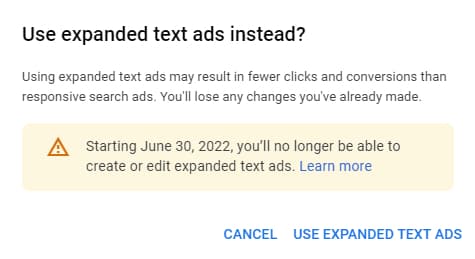
A major reason why the search engine is changing their ads is to keep up with social media ad options that are constantly changing and improving.
Google’s decision is based on helping to create more appropriate messages for users based on their search intent. Ads can be dynamically created during the ad auction to respond to specific searches.
Google wants to ensure the ads that show up are the most relevant ones, although some argue that advertisers won’t have as much control over what ads appear.
Until the deadline, you can still create and edit new expanded text ads.
Expanded Text Ads vs Responsive Ads
So it appears that these Google expanded text ads will be going away. But what makes these new responsive search ads different enough to make Google drop its ETAs?
Responsive search ads allow people to display more text and relevant content to customers.
You will enter a variety of headlines and descriptions as part of your campaign, and Google will test different combinations for these messages. Google will learn which ones perform the best and focus on those when getting your ads out to viewers.
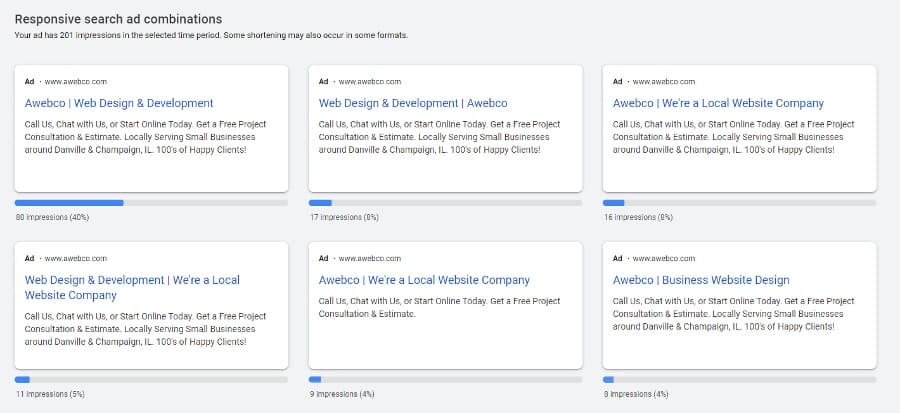
You are basically allowing Google’s multi-billion dollar search and ad algorithms to do all of the split testing and search matching for you.
These campaigns let you create different messages that focus on multiple keywords you want to target. Google will display two to three headlines and two descriptions in various combinations and orders and review which ones are most useful for your message.
You can also manually review all of this information yourself and make changes to your ad from the data you see as well.
What Can You Do Now?
You can use a workaround to help you get used to changes now that Google expanded text ads won’t be around anymore. You can create responsive ads that meet all the requirements while pinning headlines and descriptions in the top three positions.
You can use whatever features are already in your ETAs for these newer responsive ads, but you must review how well you can prepare something of value.
You might get a lower ad quality score and pay more for each click if you don’t manage your ads well enough.
But you can pin your headlines and descriptions in specific locations if your ad requires those text pieces in those spots.
You can also monitor your ads surrounding incremental impressions, clicks, and conversions. Check how these ads are working and use the most popular and viable features that fit your needs.
Review Your Campaigns
The best thing to do when moving on from expanded text ads is to look at the headlines and descriptions you’ll use. You can use up to fifteen headlines and four descriptions in your campaigns.
Google will create new ad combinations for you based on these factors, but be sure when looking at your messages that you know what is working and that the options you’ve provided are working.
What Keywords Will You Use?
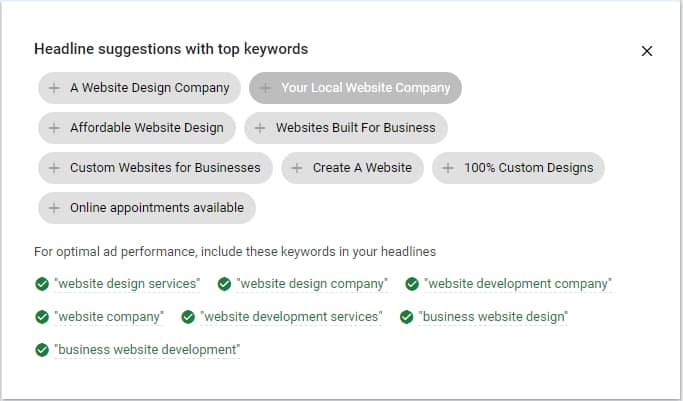
The keywords you choose in your new responsive ads are essential to the success of your ads.
You can add a top keyword in two or more of your headlines. You can include those keywords in other features in your ads, although whether they are necessary will vary based on what you want to convey in the message.
As part of the testing process, you should also have at least three headlines that don’t include the keywords you’re using. Adding a variety of similar keywords to these headlines will keep your ads from being too repetitive.
You could also provide more value to people by showcasing details on more things surrounding your business and what you want to say to your audience.
Check Existing Expanded Text Ads
You won’t be able to create or edit expanded text ads after Google discontinues them. But these ads will still stick around if they already exist.
You can pause ads as you see fit, or you can delete them altogether. But keep in mind, any ads you delete cannot be restored.
You can adjust and test your existing ETAs to see how well they work, including seeing which ones are the most responsive.
Be ready to stick with these ads if you have ones that are already working well, but be prepared to move on from ones that are performing poorly if necessary.
Google encourages having at least one ETA in each ad group you create alongside the responsive ads. You can use the ETA to test how your responsive ads are working and if your current messages are useful enough.
Be Prepared To Work With Responsive Search Ads
Google expanded text ads aren’t going to be supported much longer, but you can begin replacing them with responsive search ads ahead of time.
Be sure you review what you have with your current expanded text ads and create a plan for how you’re going to handle changes.
You will be more successful in managing your search ads if you start taking proper steps before the upcoming deadline in June 30, 2022.
See how AWEBCO can help you with these efforts thanks to our dynamic services! Get in touch with us today by calling 217-903-5999 or by sending us a message!




One Response
As a designer, this article is so helpful for me. The text on ads is so important thing in the design market. Thanks for sharing it.