Running a successful Google Ads campaign requires a lot of planning, research, and optimization.
Choosing the right bidding strategy is one of the most important decisions you’ll make when setting up your campaign.
Your bidding strategy will determine how much you’ll pay for each click on your ad, and ultimately, how successful your campaign will be.
There are several different bid strategies to choose from, each with its own advantages and disadvantages.
In this article, we’ll look at the most popular bid strategies, and help you decide which is right for your campaign.
Bidding Types
There are many different ways to bid on your ads, depending on your overall campaign and advertising strategy. Let’s review the main bidding types for Google Ads campaigns.
Cost-per-click (CPC)
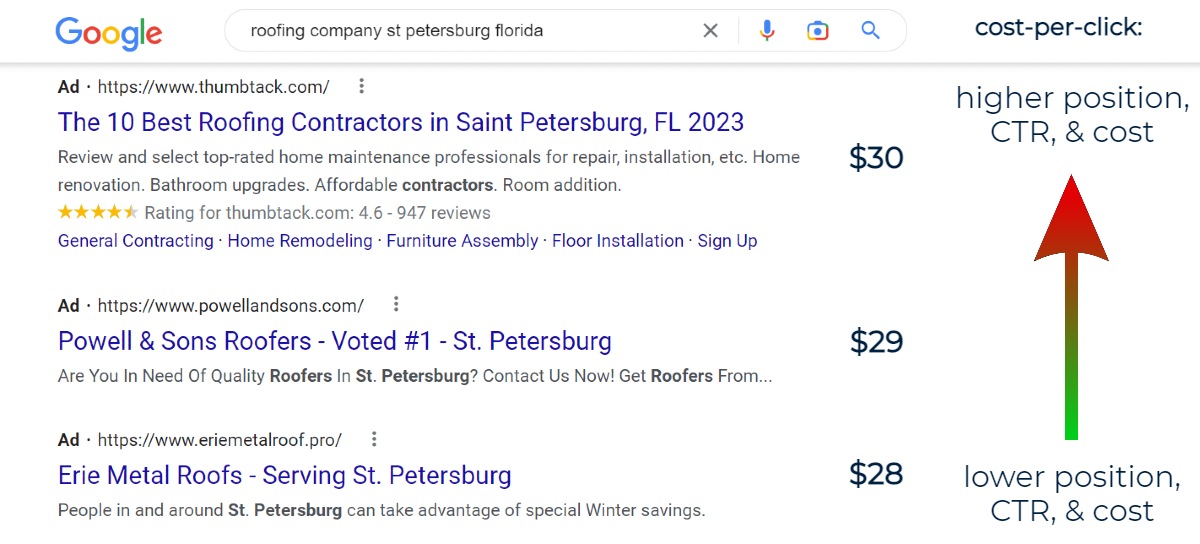
Cost-per-click (CPC) is the most common bid strategy, and the one that most advertisers start with. With CPC, you set a maximum bid for each click on your ad, and you’ll be charged the minimum amount necessary to maintain your ad’s position.
If you’re the only advertiser bidding on a particular keyword, you’ll pay the full amount of your bid for each click. However, if you’re competing against other advertisers, you’ll only pay the amount necessary to outbid the next highest bidder.
CPC is a good choice for advertisers who want to control their costs, and who want to know exactly how much they’re paying for each click.
However, it can be difficult to predict how much you’ll end up paying for each click, and it’s possible to spend more than you intended if you’re not careful.
Consider using Google’s keyword planner tools to get an idea of your potential CPC, however understand that the amount you pay will vary in real-time auctions.
Using additional techniques such as setting a maximum cost-per-click, or using the maximum clicks bidding strategy can help control and bring down your costs.
Typically, this method is more costly per interaction, however the clicks are much more qualified and show up only when someone is searching for what you’re offering.
If you’re a business offering a product or service to searchers, CPC bidding on the Google Search Network is our #1 recommended bidding strategy.
Cost-per-impression (CPM)
Cost-per-impression (CPM) is another popular bid strategy, but it’s less common than CPC.
By using the CPM bid type, your bids are based on a cost of 1,000 impressions, or views of your ad.
You can either set a cap on how much you are willing to pay for 1,000 views, or you can let Google’s algorithm try to get the best pricing by leaving your target open.
Usually you would use cost-per-impression bids on the Google Display network with a focus on brand awareness.
Cost-per-acquisition (CPA)
Cost-per-acquisition (CPA) bidding is a Google Ads bidding strategy that enables advertisers to set a desired cost per acquisition or conversion.
This strategy works by automatically setting bids to help get as many conversions as possible at or below the target CPA.
Google’s machine learning algorithms are used to optimize bids in real-time, taking into account a variety of factors including the device, location, time of day, and other contextual signals.
The goal of this strategy is to maximize the number of conversions at or below the target CPA.
If you set your target CPA too low, this can hurt your campaigns, and even cause your ads to stop showing.
Cost-per-view (CPV)
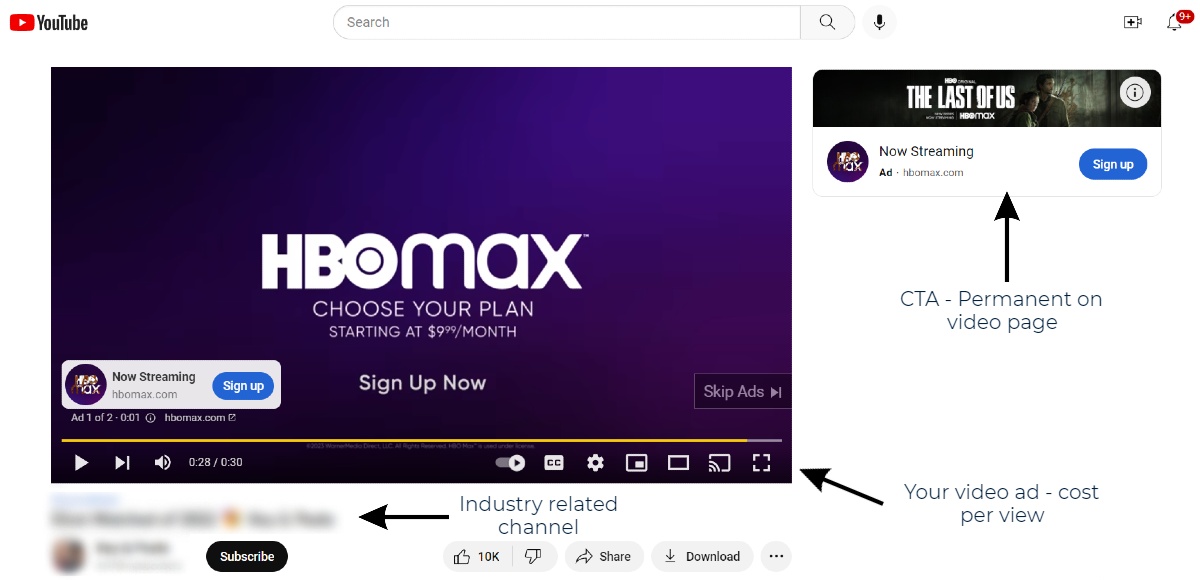
Cost-per-view (CPV) is a bid strategy that’s similar to CPM, but it’s more focused on video ads.
With CPV, you set a maximum bid for each view of your video ad, and you’ll be charged the minimum amount necessary to maintain your ad’s position.
CPV is a good option for advertisers who are targeting a specific audience and wants to reach them through video ads.
It’s worth noting that CPV bid strategy is only available for video campaigns in Google Ads, and it might not be available for all the video format and platforms.
Bidding Strategies
Along with choosing the method you would prefer to use to bid on your ads, you’ll also need to combine that by choosing the right bidding strategy for your Google Ads campaign.
Here are some of the most common bidding strategies for Google Ads, as well as when you should and shouldn’t use them.
Maximum Clicks
The Maximum Clicks bid strategy is designed for advertisers who want to maximize the number of clicks on their ads.
With this strategy, you set a maximum daily budget, and Google Ads will automatically adjust your bids to get as many clicks as possible within that budget.
This strategy is ideal for advertisers who want to drive more traffic to their website, but who don’t necessarily need to convert that traffic into sales or leads. If you have a high converting website
Maximum Conversions
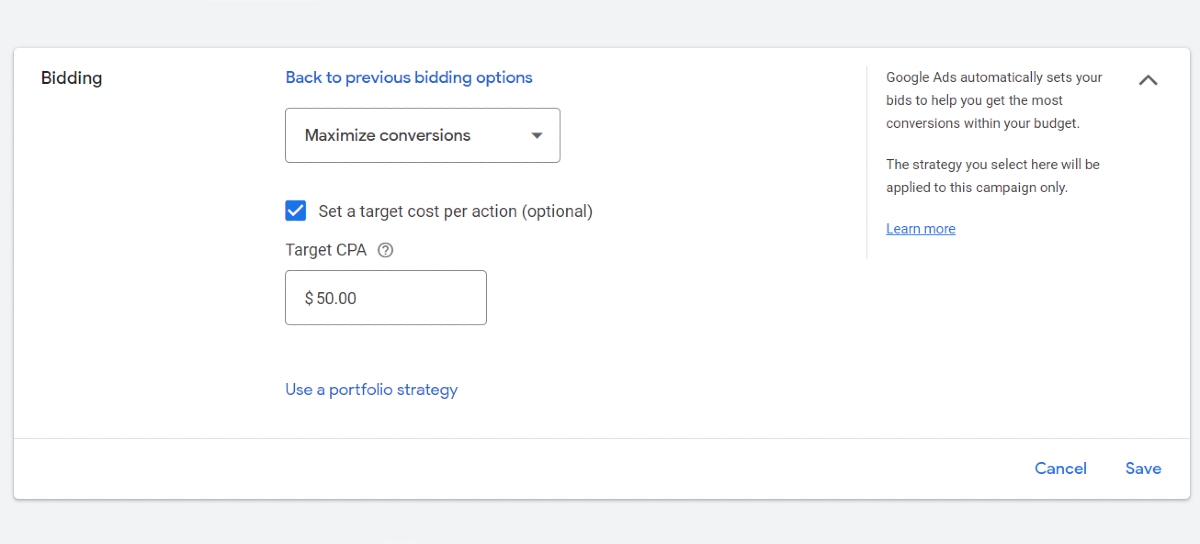
The Maximum Conversions bid strategy is designed for advertisers who want to maximize the number of conversions (sales, leads, etc.) from their ads.
With this strategy, you set a maximum cost-per-conversion, and Google Ads will automatically adjust your bids to get as many conversions as possible within that budget.
This strategy is ideal for advertisers who want to drive more sales or leads, but who don’t necessarily need to drive a lot of traffic to their website.
Typically, this will result in a higher cost-per-click due to Google’s algorithm believing that this click is worth more, and is more likely to convert.
You can either let Google decide your cost-per-acquisition, or you can set it according to your own goals.
If your maximum cost-per-conversion is unrealistic and too low, you will not get good results. You will need to test what your conversion costs are to try to keep it in that area and slowly lower it over time.
Maximize Conversion Value
The Maximize Conversion Value bid strategy is designed for advertisers who want to maximize the total value of conversions from their ads.
With this strategy, you set a maximum cost-per-conversion, and Google Ads will automatically adjust your bids to get the highest total value of conversions within that budget.
This strategy is ideal for advertisers who want to drive a lot of sales or leads, and who want to maximize the revenue they generate from those conversions.
Target Impression Share
The Target Impression Share bid strategy is designed for advertisers who want to control their ad’s visibility on the Google search network.
With this strategy, you set a target impression share, and Google Ads will automatically adjust your bids to reach that target.
This strategy is ideal for advertisers who want to make sure their ad is seen by as many people as possible, but who don’t necessarily need to drive a lot of traffic to their website. You should use this strategy if you are focused on brand awareness.
Manual CPC
The Manual CPC bid strategy is a traditional bid strategy that gives you more control over your bids. With this strategy, you set a manual bid for each keyword, and Google Ads will use that bid to determine your ad’s position.
This strategy is ideal for advertisers who want more control over their bids, and who want to make sure their ad is seen by as many people as possible, but who don’t necessarily need to drive a lot of traffic to their website.
Google is trying to push users away from this method, since manual bidding requires a lot more time to manage and your ads will stop showing up if your competitors outbid you, or you can simply bid too much when you could have gotten your clicks cheaper with another strategy.
Only use manual CPC if you have the time to consistently monitor your bids and have an understanding of how much you should bid, and when it is no longer profitable.
Testing and Tweaking Bids & Strategies
In conclusion, choosing the right bidding strategy for your Google Ads campaign is essential for its success.
Each strategy has its own advantages and disadvantages, so it’s important to understand what you want to achieve with your campaign, and then choose the strategy that will help you achieve those goals.
Whether it’s maximizing clicks, conversions, conversion value, impression share or manual control, there’s bound to be a bid strategy that will work for you.
Test and evaluate the performance of different strategies and see which one works best for your business.
Need a team of professionals to handle your Google Ads campaigns and bidding strategies? Reach out to us to see what we can do!