Creating website content is completely different from other writing. An average reader will only read 20% of the words on any given page.
Whether you run your own business or serve as the CEO of a multinational corporation, you’ll need to know how to write content for a website if you want your company to succeed.
Anyone can learn to write content, but it isn’t always easy to do correctly.
From using an informal style of writing to crafting the perfect call-to-action (CTA), there are a few things you can do to set your website up for success.
Why It’s Important to Have Good Content
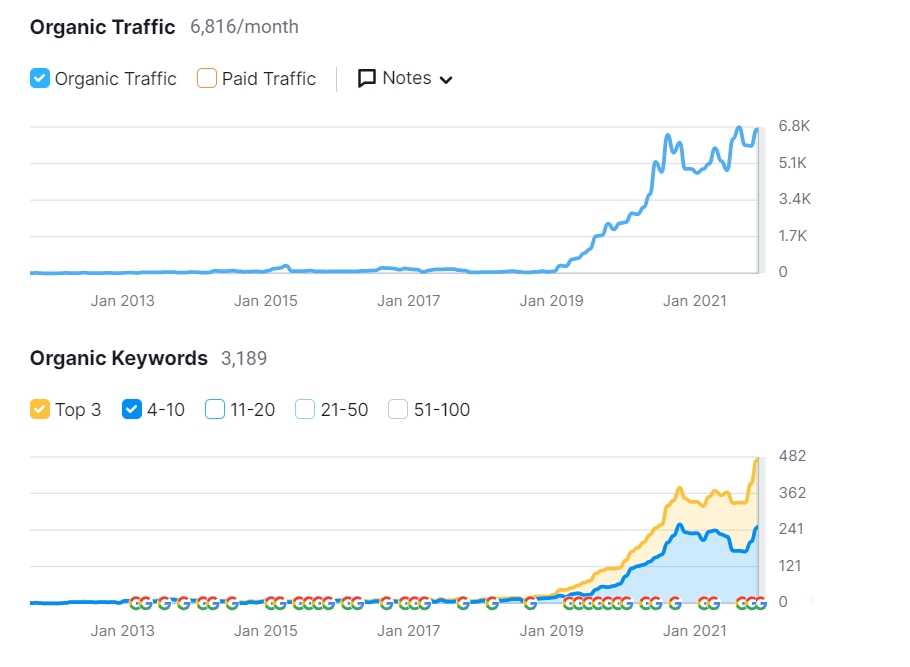
An estimated 49% of marketers say organic search gives them the best return on investment (ROI) out of every marketing channel.
To rank high in organic search, you need search engine optimized (SEO) content for your readers.
If you can figure out how to write high-quality content for your website, you can build your SEO strategy and rank higher in organic search results.
Writing content can also help bring in leads and sales. You can create content for readers who are at the start of your sales funnel.
They’ll search for review articles, informational blogs, and similar content to make buying decisions, so your website content can easily translate into higher revenue for your company.
Even if you don’t plan on creating the content yourself, you’ll need to know what to look for, and certain criteria to ensure that the writers that you hire follow.
Essential Website Content You’ll Want to Create
As you learn how to write content for a website, you’ll figure out what kind of content works best for your company and the overall industry.
You’ll generally want to have multiple kinds of content because each content type serves a different purpose.
At the very least, you should learn how to write content for your home page, service page, blogs, product pages, and about page.
Homepage Content
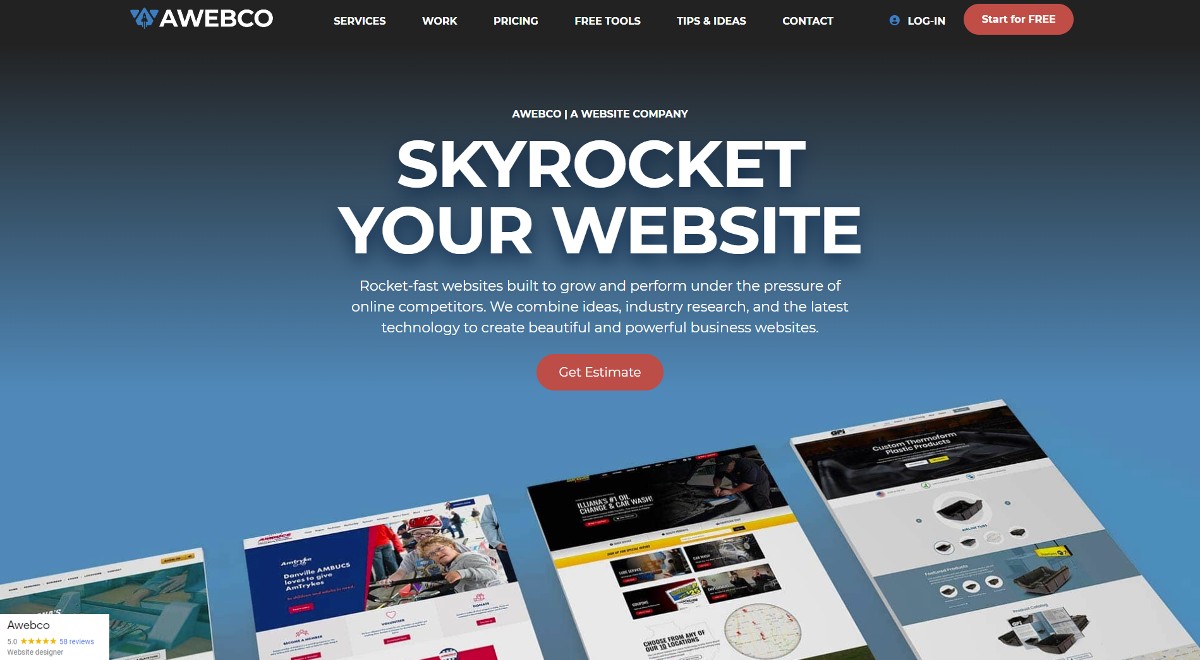
Your home page is likely where most of your backlinks will go, and it’s where people will be sent if they search for your branded keywords.
More importantly, your customers need to use your homepage to learn about your products and services.
If your home page is hard to navigate or doesn’t bring visitors into your sales funnel, it needs to be changed.
Ensure that your home page is complete with simple and easy navigation with links to all of your most valuable pages.
The hero section, or the very first top part of your home page that your visitor will see should quickly explain what you do, how you can help, and a call to action to get started.
Service Page Content
Learning how to write content for a website is important for marketing your services.
These pages help customers make up their minds about whether your business offers the services they need.
Service page content also informs the search engines about what your site is about and can help your search engine ranking.
On your service page, list out and write about each of the services that you offer to your customers and website visitors.
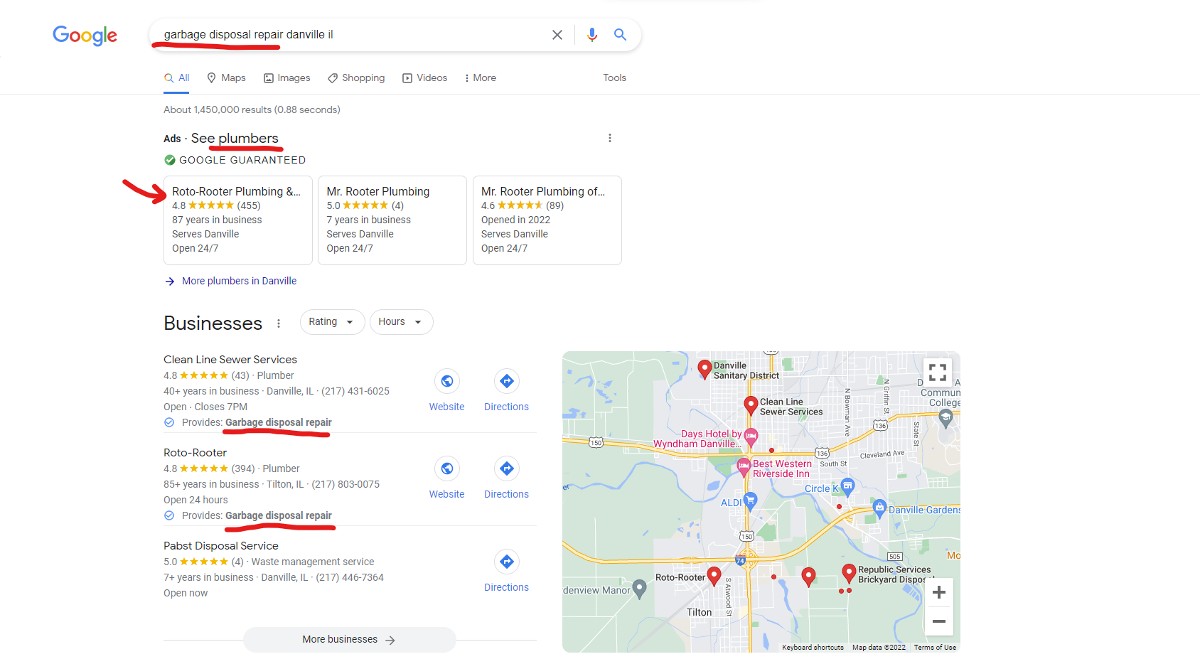
Having the exact keywords of the services you provide on the page will help tie your website to your Google Business Profile, and in-turn help you rank organically for when someone searches for your services.
Ideally, you will want to have an entire page to talk about each one of your services.
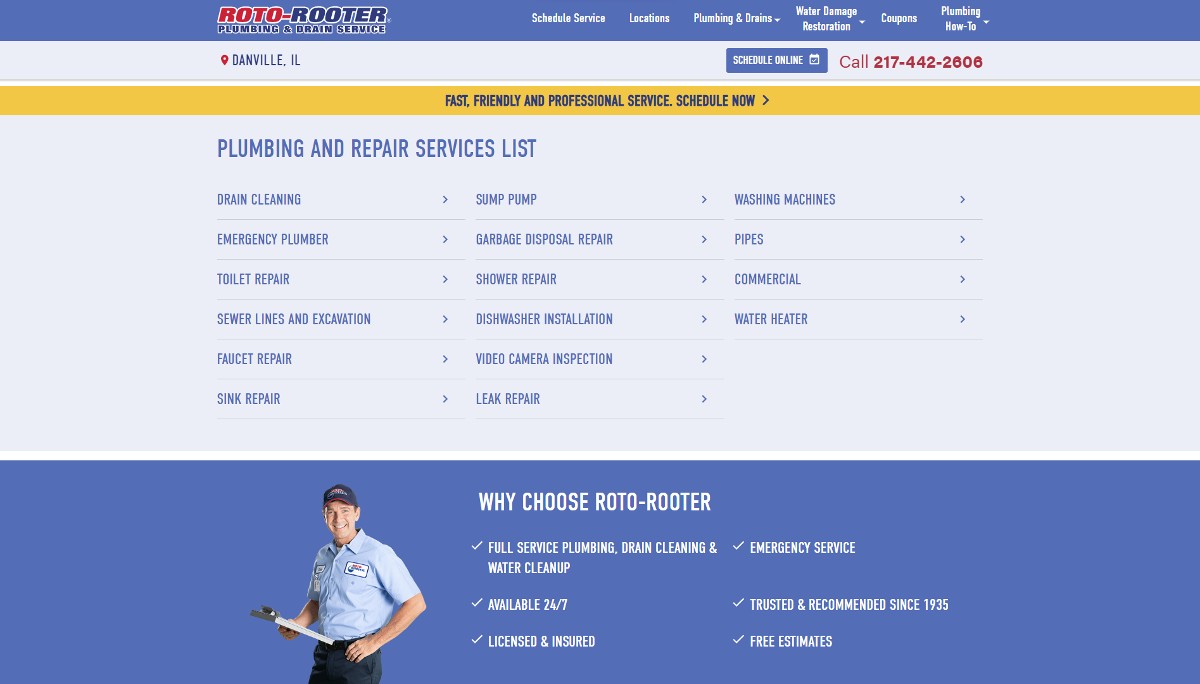
For example, if you are a plumbing company (think Roto-Rooter), you will have service pages like:
- Drain cleaning
- Shower repair
- Toilet repair
- Dishwasher installation
- Emergency plumbing
Each of these services are specific things that a potential customer will be looking for in a business like yours.
Additionally, Google will list your business and tag it when it is able to tie the search and your website content together.
About Page Content

Your about page shows what your business does, who you are, and how you can help your customers.
Along with using content for SEO, you can use your about page to tell readers why they should work with your team.
Typically, your ‘About’ page is not meant to rank for any specific keywords, but to build trust and authority in your company.
Visitors, as well as Google bots and employees, will be looking for your about page to learn more about your company and verify that you’re a real business.
Be sure to include information about your staff, how long you’ve been in business, your mission statement, etc.
The point of an about page is to build trust with the reader and help them feel more confident in the decision to work with your company.
Product Page Content
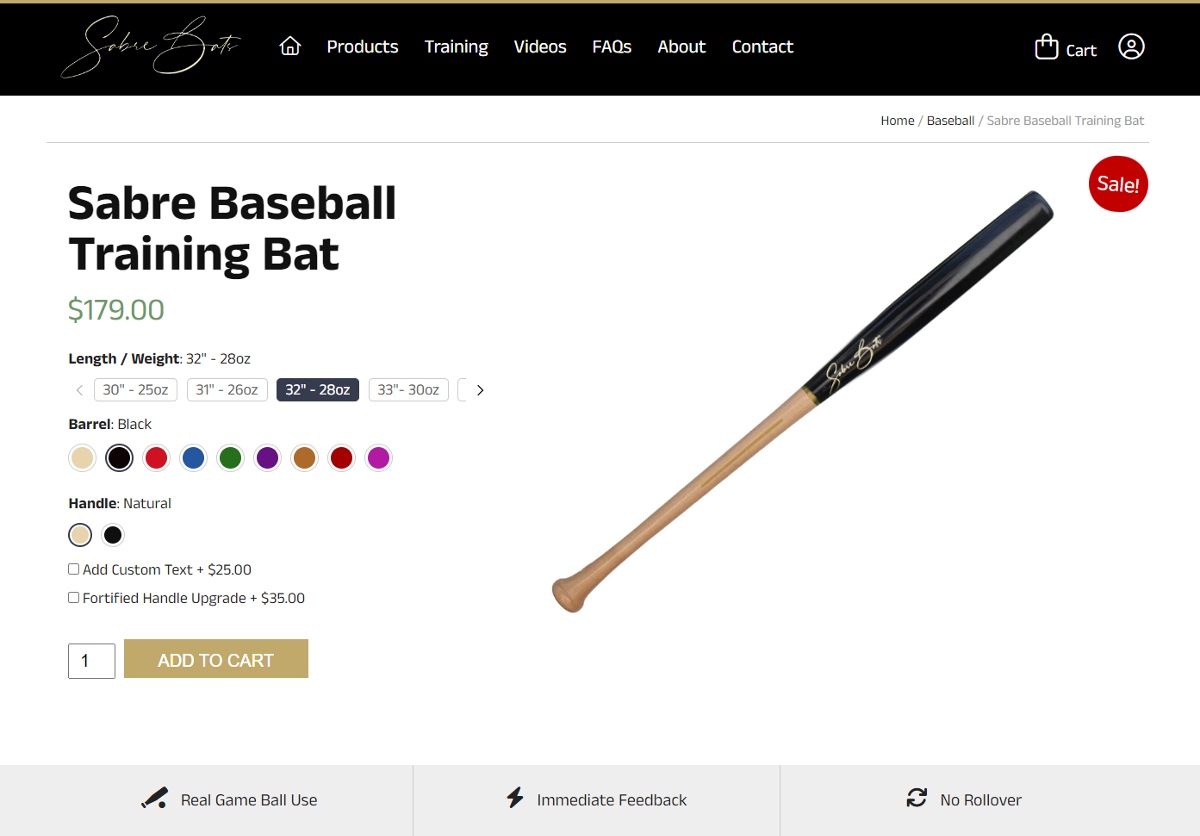
Like service pages, your product pages are an important way to bring visitors into your sales funnel.
They instantly show what you sell and how you can solve one of your customer’s current problems.
Additionally, the keywords on your product pages help to tell search engines what your site is about and how you should rank for different keywords.
The more content you include on your product pages, the more authoritative your business and website will be in regards to that product.
One of the most important areas of the product page is the very top hero section, which should include an image of your product, along with any product options and an ‘Add to Cart’ button.
On each product page, be sure to include the following:
- Multiple pictures with different angles
- Pricing
- Features and functions
- Delivery information
- Related products
- Product specifications, dimensions, technical details
- Comparisons to other products
- Reviews and testimonials
Additionally, you should consider blogging about your products as well and linking back to them.
Blog Post Content
Blogging gives you more opportunities for ranking in search engines.
When people talk about how to write website content, they often think about blogging first.
A blog helps to bring in readers from organic searches, and it informs search engines about what your company does.
Each article allows you to position yourself as someone who can solve a customer’s problem.
For example, an HVAC company may write blogs about how ductless mini-splits air conditioners can prevent cold spots in rooms and save on electricity costs.
By writing a blog about these topics, the HVAC company will bring in readers who want to solve those two problems.
Small businesses that blog can grow their leads by 126% more than small businesses that don’t blog. Writing content just once or twice a month can bring your business 67% more sales opportunities.
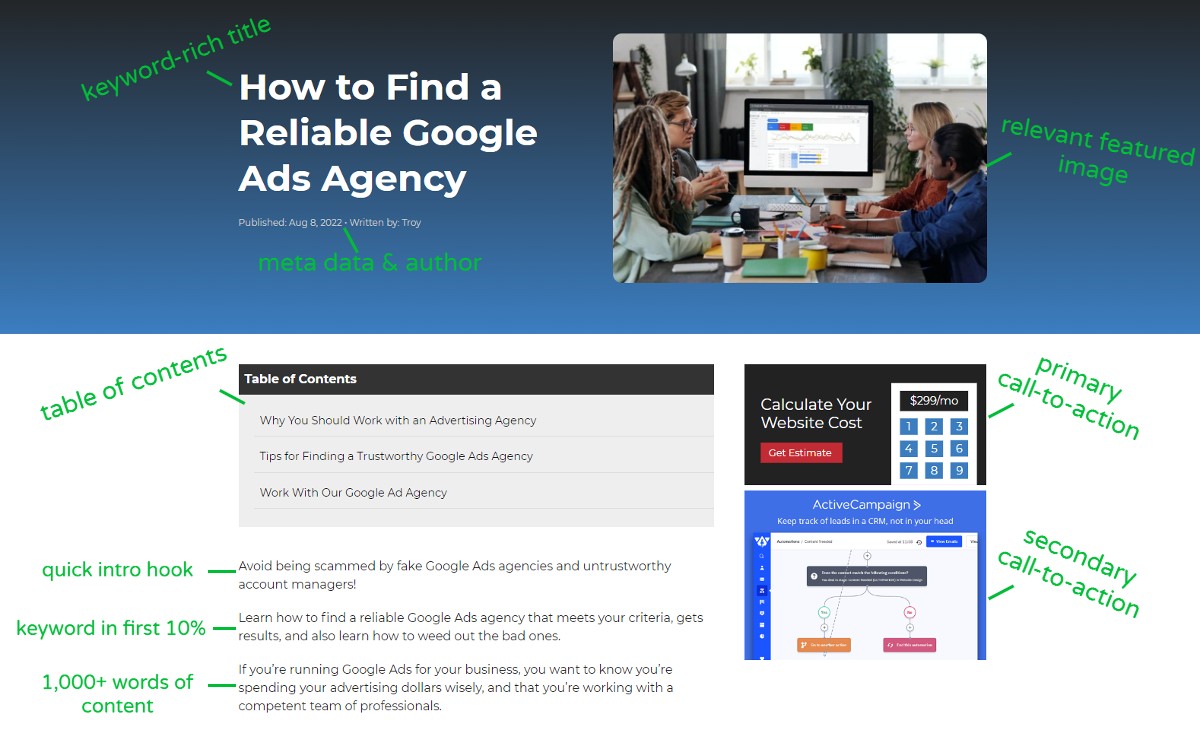
When writing blog post content for a website, be sure to include the following:
- A keyword-rich title based on keyword research
- Publish date / updated on date
- Author and author bio
- A relevant featured image with the keyword in the file name and alt text
- A table of contents in the beginning that links to each of your blog headings
- An eye-catching introductory hook to the blog to get their attention immediately
- Restate the title again in the first 10% of the blog post introductory paragraph
- Write 1,000 (or more!) words of content for each blog post
- Include a primary and secondary call-to-action (CTA)
- Break up the blog post into multiple headings (H2 – H3)
- Restate the title again in your conclusion paragraph
- Use your ideal keyword 2 – 4 times
- Use variations and similar keywords in your text
- Include 2 – 4+ internal links to other pages on your site
- Try to include 1 outbound link, such as a reference to research, or news article, or Wikipedia page
By following the correct blog post structure and content guidelines, you can compete with others in Google.
However, don’t think you will succeed by just putting out a bunch of little pieces of content that no one really cares about and is not actually helpful to others.
It takes a lot of time, research, writing, and even maintaining blog content to get that valuable organic traffic that every business strives for.
Consider that every big and innovative business has already been doing this for the past 30+ years, with new competitors creeping in every single day.
And if you’re just now getting started, it’s going to take a considerable amount of time to build your brand and website authority to compete or beat them out of the top results.
Plan on building and growing your blog post content for the next few years to help build your brand authority in your topic industry.
As long as your remember to create great, valuable content consistently, you will be on the right track.
Tips on How to Write Great Website Content
Writing content allows you to bring in more website traffic, leads, and revenue. In fact, studies have shown great website content can help in a variety of ways.
- A website will attract 55% more traffic if it includes a blog.
- 78% of consumers trust brands more when they create custom content.
- Marketers are 13x more likely to bring in a positive ROI from their work if they emphasize blogging.
- Conversion rates are nearly five times higher when companies focus on using content marketing.
For your website to succeed, you have to write content consistently. More importantly, this content has to be optimized for the search engines and your readers.
To create great content, remember to use the following writing tips.
1. Keep the Writing Simple
When writing for the web, you have to remember you aren’t writing the next great American novel or your doctoral thesis.
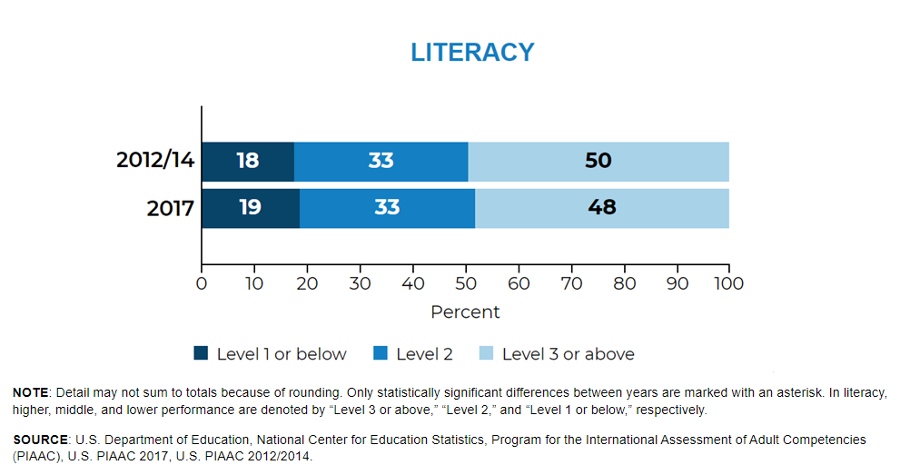
Only 48% of adults read at a high level of literacy. If you have long sentences and a fondness for your thesaurus, you’re going to miss out on half the population.
Along with short sentences and simple words, you also want short paragraphs. People tend to scan articles, so make them rich in headings and subheadings.
Instead of writing a bunch of long, technical paragraphs with walls of text, try to break apart every sentence or two with a space to make it easier to read.
2. Remember Your Audience
Are you writing for diehard car junkies or people who just had their alternator die and need a repair shop?
Do you write for young, hip adults, or are you writing for an older, more traditional audience?
The kind of content you write will vary based on who your audience is, so make your content accessible and engaging for your users.
Consider their age, education, employment levels, interests, and more based on buyer personas that you create for your business.
3. Use Visual Content for a Greater Impact
Humans are extremely visual, and it’s easier for your audience to absorb visual content.
Because of this, you should incorporate great videos and images into your pages. It adds value to your existing written content and serves as another way for your audience to discover your company.
By having unique images that have keyword-rich file names and alt text, your page and image can be found in Google Images.
If you include your own unique videos that go along with your page content, you can publish those on YouTube and publicly list them under your business channel with the same title as your page.
Doing this will make it easier to be found across multiple Google properties.
4. Skip Technical Terms

Unless you absolutely have to, try skipping out on technical jargon and fancy words. When writing for the web, you don’t get bonus points.
In reality, technical jargon can deter potential customers and turn your prospects into dead-ends.
However, if you work in a technical industry with highly-technical products and your buyers are a highly-technical group, feel free to get into those fine details.
Just keep in mind who your audience is and how comfortable they are with the technical aspects of your product, services, or information.
5. Update Content
When someone searches for information, they want relevant, up-to-date content. Otherwise, they’ll go somewhere else for additional information.
Unless you want to miss out on a sale, you should update your content as frequently as possible.
In addition to updating individual articles, you should also post new content on a regular basis.
Google and other search engines reward sites for being regularly updated, so you can improve your search engine ranking by posting on a regular basis.
6. Use an Inverted Pyramid
In academic writing, you’d start with an introduction and gradually build your argument.
With website content, you want to provide your reader with the most important information first. Afterward, you can give additional details.
Readers generally have a short attention span, so they aren’t going to hang around for long if they can’t see the information they need.
By putting the important stuff first, you can keep readers on your site longer and potentially get them to read more.
7. Embrace Bullet Points
People don’t read everything you write in an article. They scan your content for the information they need, so you need to write each article in an easy-to-scan way.
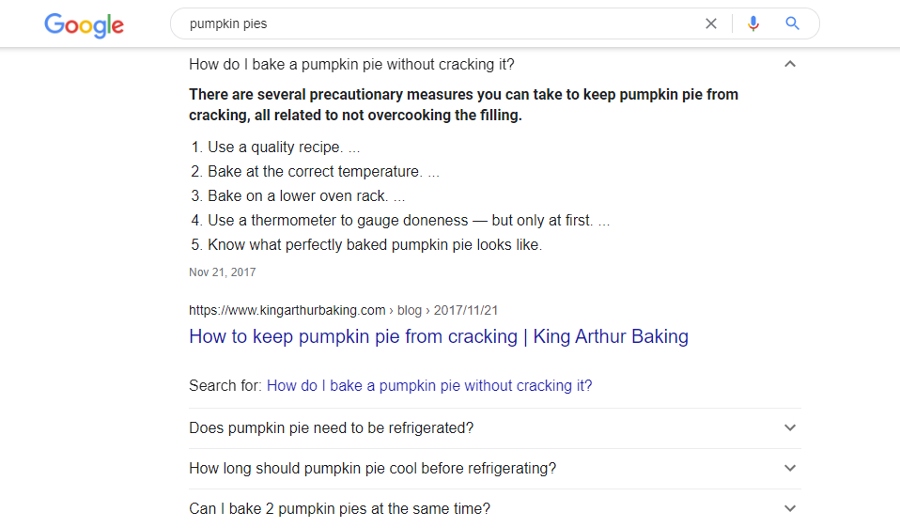
Along with headings, this means you should use bullet points and numbered lists as much as possible.
Google loves to see lists and bullet points in your content, and these can even help capture things like rich snippets, ‘People Also Ask’ sections, and more.
Not only that, but lists and bullet points and easy to digest and can provide a ton of value in a small section.
8. Use Headings
Good website content has headings. In addition to making your content easier to read, headings also tell the search engines what your article is about.
Be sure to use keyword-rich and detailed headings that are related to the topic of your content.
You can even structure your entire page content based on your headings and use them as an outline to know what areas to cover.
When creating headings, it’s important to keep them short and descriptive so that they’re easily understood by readers.
Here are some general guidelines for using headings:
- Use H1 tags for your main heading – There should only be a single H1 tag on a page, and it should be the title
- Use H2 tags for subheadings within a page – Break apart your blog post into several relevant H2 subheadings
- Use H3 tags when you have more subheadings under your H2 – Typically you don’t want to go beyond 3 levels of headings
9. Choose Your Keywords Wisely

Once your content is posted online, Google will crawl your website to see what each page is about. The keywords you use will determine which search results you appear in.
In addition, these keywords help to tell Google what your site is about.
When learning how to write content for a website, you need to spend time learning about keyword research.
Long-tail keywords tend to perform best, but there is an entire science behind which keywords you use.
Use a powerful keyword research tool such as SEMrush to be sure that you’re finding and targeting the right keywords.
10. Incorporate a Call To Action
You made your website content for a reason. The last thing you want is for a reader to leave as soon as they get the answer they need.
A call to action encourages readers to download a PDF, sign up for a newsletter, follow you on social media, or call for a free quote.
A good CTA allows you to turn your website content into leads and revenue. Whether you want to promote other content or a specific product, you need a strong CTA.
Create Content to Attract Visitors and Generate New Leads
By learning how to write content for a website, you can do more than build a home page and service pages.
Your content strategy can help you build an online presence, generate new leads, and eventually boost your revenue.
As an integral part of your organic search strategy, written content can also help you with SEO.
If you are struggling to figure out the right content for your site, help is available. Awebco has years of experience helping organizations create content strategies for their websites.
To learn more about how AWEBCO can help, reach out to our team today!