Website copy is vital to getting an audience and, ultimately, getting leads and sales. There is a current debate over AI vs humans for website copy—which writer should businesses choose?
When deciding which is the best choice for your business, there are 7 factors that should be considered.
1. Delivering instructions
The first factor to consider is the ease with which a business can deliver instruction to a writer versus AI.
Being able to get useful information from an AI requires being good at prompting it—this is a skill that takes time and practice to learn. The prompts have to be specific and edited throughout the process.
On the other hand, writers are used to inquiring about the needs of a business and getting to the root of the purpose and audience for the content.
Businesses can have a direct conversation with the writer to tell them what they are looking for, and they can give them feedback or request edits for articles.
Businesses are able to build a relationship with their copywriters.
It is easier to have a conversation with a person than with an artificial intelligence.
2. Production costs
One of the biggest factors that businesses always consider is cost. When thinking of cost, there are two big areas to consider—money and time.
Money
AI software, such as Jasper or ChatGPT-4, offer monthly plans. Depending on the amount of content produced each month, this could be significantly less expensive than hiring human writers.
However, with people and with AI content, sometimes you get what you pay for.
Would you want to pay money to have AI write the same thing everyone else will be using in your industry?
Time
Writers may require more time upfront. With writers, there is the time needed to hire them, provide instructions, and communicate with them. With AI, businesses spend time prompting the AI to write the article.
However, AI-written articles require much more time to get published than those written by a human writer.
A good writer can research, write, format, ensure the post includes the keywords, edit, add pictures, add links (both internal and external), add a call to action, and publish the article.
AI-written posts require more editing and fact-checking. The business must also format the post, add pictures and links, and publish the article.
3. Accuracy
Another factor to consider is the accuracy of the website copy when an AI writes it versus when a human writes it.
There is a lot of talk about how accurate AI copy is. AI can give users factually inaccurate answers and content.
ChatGPT shows a warning at the bottom of a new chat page saying it “may produce inaccurate information about people, places, or facts.”
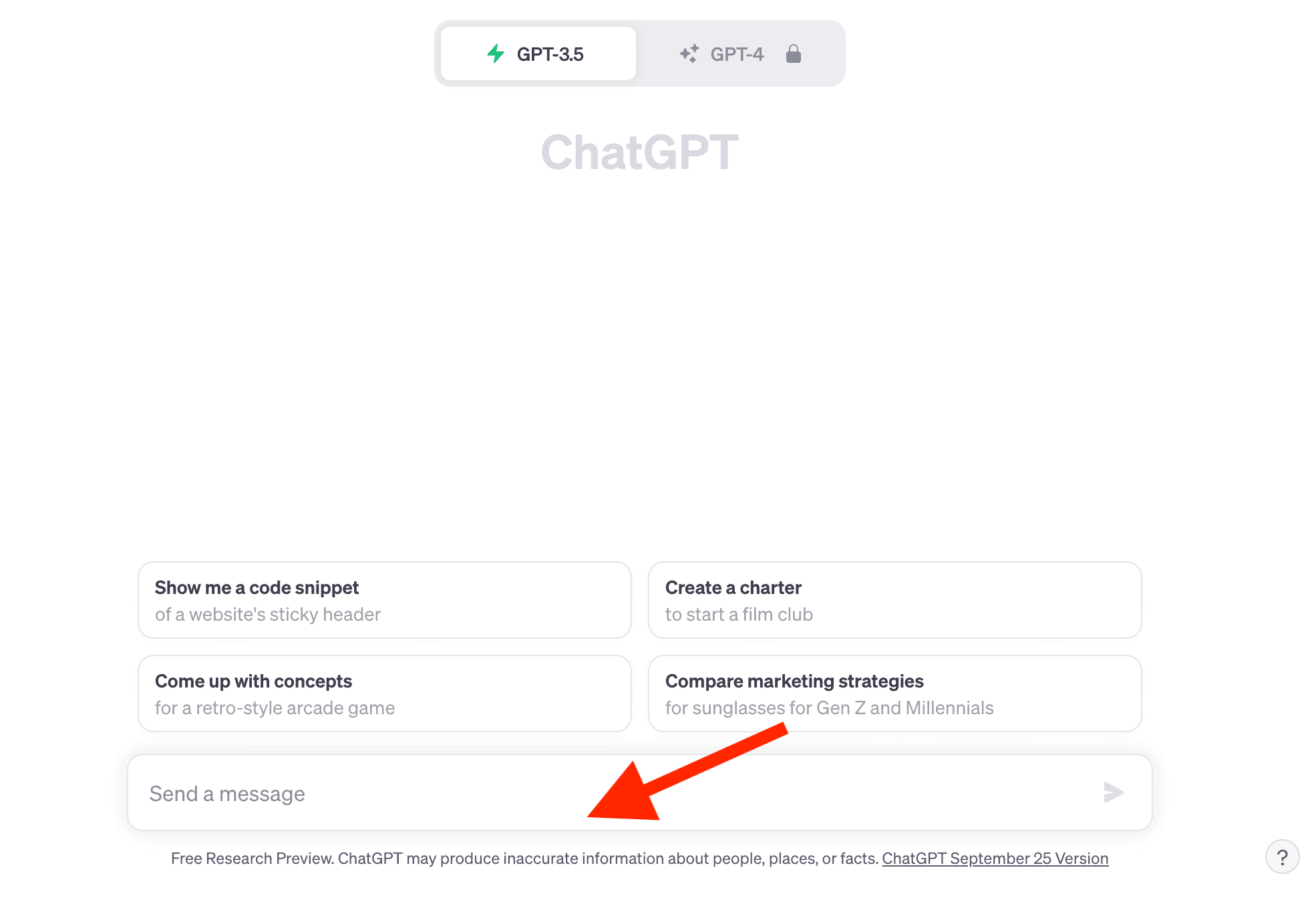
Even Google gives warnings about the possibility of inaccurate answers. When using Google’s new Generative AI, you can see warnings that say:

Or:

Most businesses will have more trust in a writer, who is experienced in the field, providing accurate information than an AI.
For now, ‘AI’ as we know it is simply a ‘language learning model’, or LLM. That means that it is simply looking to use words and phrases that make the most sense for language, and they do not have an infinite database of facts about everything on Earth.
4. Uniqueness
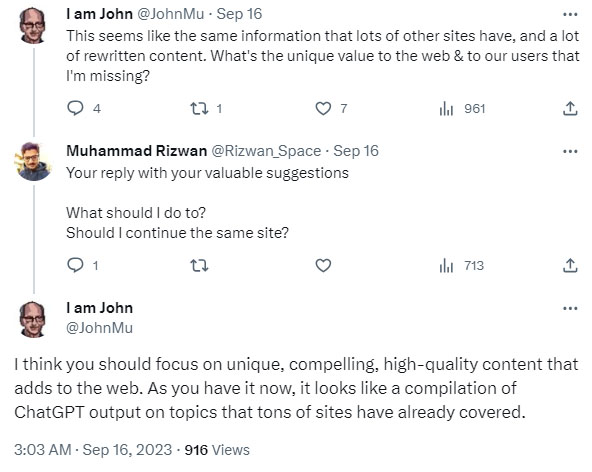
A big difference between AI vs human writing is that AI content is not unique.
People are pumping out thousands of pages every day with generic AI content or content written using ChatGPT. Given that the AI is pulling from the same content and answering the same (or very similar) inquiries, the content is bound to be repetitive across websites.
This also poses the problem that you could be posting duplicate content on your website.
Google is not going to rank and promote your website for regurgitating the same information on thousands of other websites.
5. Helpfulness
Website content needs to be genuinely helpful and the #1 resource on the web for that topic.
Content with a lot of fluff or that lacks credibility is not as helpful.
AI cannot add first-hand experience and may have a harder time understanding the intent behind the copy.
6. Readability
It doesn’t matter how accurate, unique, or helpful the copy is if it is not easy for your audience to read.
Two big areas that impact readability are language usage and format.
Language and voice
Part of building a brand is finding your unique voice. A human writer can be more creative, tailor their writing to the company’s voice, add stories, and include personal experience. These are things that an AI cannot replicate (at least not genuinely).
Additionally, AI can use repetitive phrases and struggle with some informal writing.
AI uses Natural Language Processing (NLP) to both understand language and replicate it. NLP still faces several challenges, such as:
- Understanding the context of words or phrases
- Use of words with multiple meanings
- Figurative language, such as irony, idioms, or sarcasm
- Understanding the meaning of something if there are errors, such as words that are misspelled
Human writers are able to naturally understand the context of information.
Format
The format of content also impacts how easy it is to read.
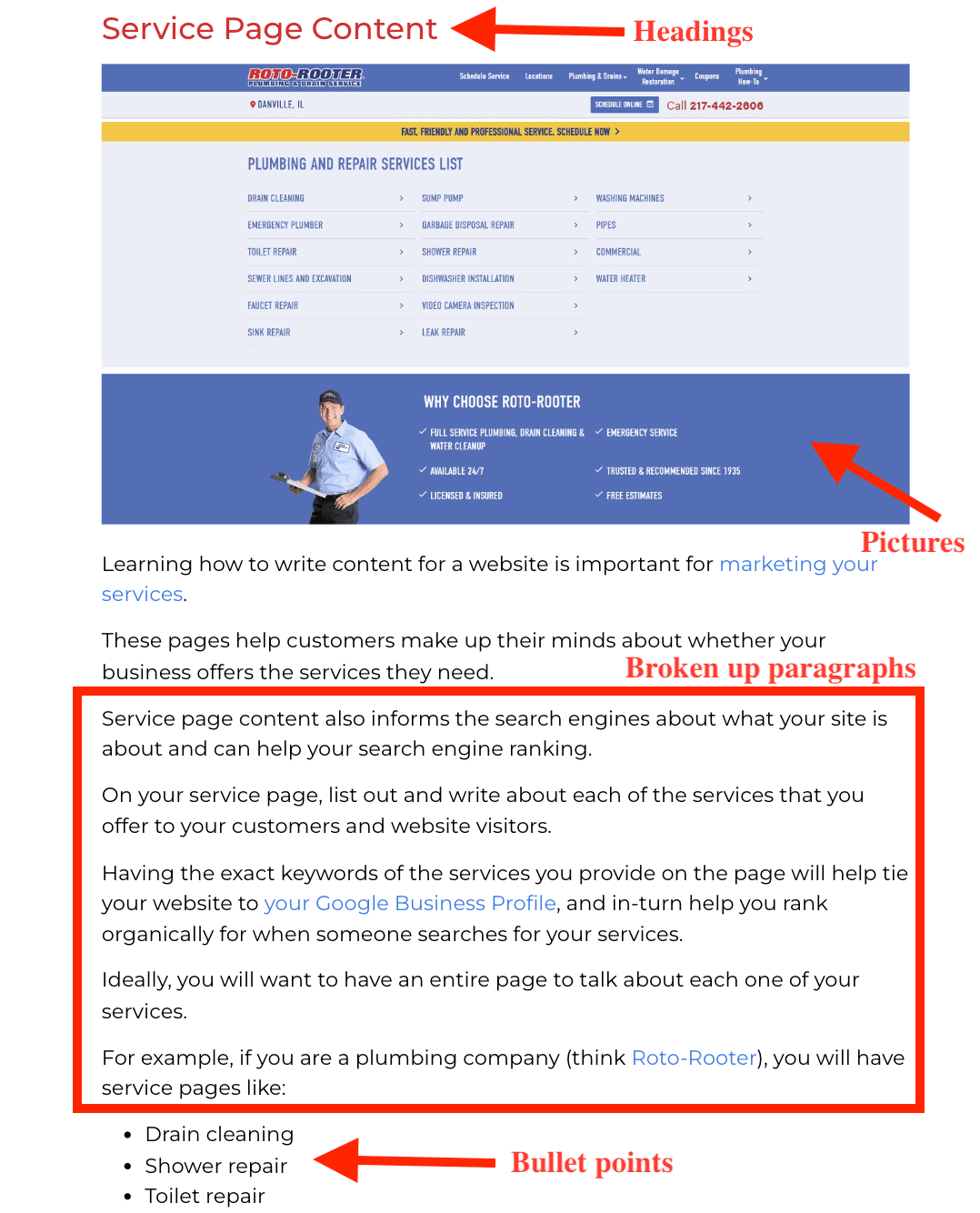
Good format includes:
- use of headings to break up and organize the text
- adding images or tables
- breaking up longer paragraphs
- using bullet points
AI can do some of this formatting, such as adding headings, but it cannot fully format copy for a business in a way that doesn’t require extensive editing.
Writers know how to format website content.
7. SEO
A big consideration for businesses is always the return on their investment. For website copy, the first step is getting seen—that is where SEO (search engine optimization) comes in.
Search engine optimization is ensuring that website copy is optimized to have the best chance to rank on the search results page.
According to Google’s current policy for AI content, whether the content is generated using AI is not a factor that Google considers when determining rankings.
However, Google also says that using AI to create content primarily meant to rank on Google is against their spam policies and that they value EEAT (expertise, experience, authoritativeness, and trustworthiness).
AI content could have a harder time showing EEAT because it cannot show personal experience with the topic and could have inaccuracies.
Additionally, its repetitive nature and inability to incorporate keywords naturally could also impact how it ranks.
Finally, while Google doesn’t currently penalize AI content, it is important to think about the future. With the mass production of AI content, there could be a future Google algorithm update that aims to combat AI spam.
Hire SEO professionals to write your copy
Now that you know all the factors to consider when deciding between AI vs humans for website copy production, the next step is to start producing content.
Here at AWEBCO, we offer SEO content written by humans that is accurate, unique, and helpful. We know how to write and format a post so that it is easy to read.
Give us a call at 217-903-5999, or contact us online to learn more about the website copy our team can provide for you!